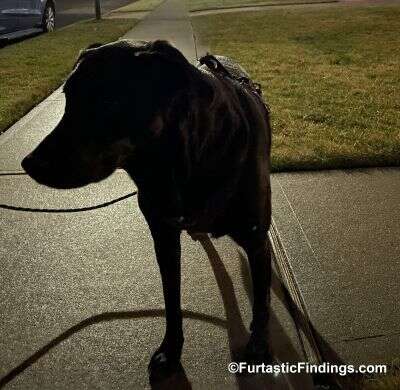
Anytime we leave the house or when we go to bed, we always leave some kind of light on for our dog, albeit a lamp or nightlight so she is not in total darkness. But I have wondered, is it OK for dogs to be in the dark? Are dogs afraid to be in the dark?
This post will look at how dogs see in the dark, how darkness can impact your pup, and how to create a safe environment for your dog in low light conditions.
Table of Contents:
| Vision And Light Requirements For Dogs |
| How Much Light Do Dogs Need To See? |
| Health Impacts Of Darkness On Dogs |
| Creating A Safe Environment In Low Light Conditions |
Related: Are Dogs Really Color Blind? Canine Eyesight: Understanding How Dogs See The World
Vision And Light Requirements For Dogs
Dogs have unique visual abilities that differ from humans. Their eyes are adapted to function well in various light conditions, including low light.
Dogs’ eyes have more rods than human eyes. These rods help them see better in dim light.
Their pupils can also open wider to let in more light.
Dogs have a reflective layer behind their retinas called the tapetum lucidum. This layer bounces light back through the retina, giving the eyes a second chance to absorb it.
Dogs can see moving objects better than stationary ones. They have a wider field of view than humans but less sharp focus.
Dogs can’t see as many colors as people can. They mainly see blues and yellows.
How Much Light Do Dogs Need To See?
Dogs don’t need much light to see. They can navigate in very dim conditions that would be challenging for people.
You don’t need to leave bright lights on for your dog at night. A small nightlight or even moonlight through a window is often enough for dogs to move around safely.
In total darkness, though, dogs can’t see any better than people. Some light is needed for their eyes to work.
Health Impacts Of Darkness On Dogs
Darkness can affect dogs in different ways. It’s important to understand how lack of light might impact your dog’s mental and physical health.
Psychological Effects Of Insufficient Light
Dogs may feel anxious or stressed in dark environments. Some dogs get scared of the dark, just like people. This fear can lead to behavior changes. Your dog might bark more, pace, or become clingy.
Not having enough light can mess up your dog’s sleep schedule. Dogs need light to know when it’s time to be active and when to rest. Without proper light cues, they might have trouble settling down at night.
Some dogs may get bored or restless in dark spaces. They can’t see toys or other things that usually keep them busy. This might lead to destructive behaviors out of frustration.
Physical Health Considerations
Dark environments can increase the risk of accidents for dogs. They might bump into things or trip, which can cause injuries. This is especially true for older dogs or those with vision problems.
Lack of light can affect your dog’s eye health over time. Dogs’ eyes need some exposure to natural light to stay healthy. Without it, they might develop vision issues.
Darkness can impact your dog’s vitamin D levels. Like people, dogs make vitamin D when their skin is exposed to sunlight. Low vitamin D can lead to bone problems and a weaker immune system.
Too much time in the dark might decrease your dog’s activity level. This can lead to weight gain and related health issues. Regular exposure to light helps keep your dog’s body clock in sync, supporting overall health.
Creating A Safe Environment In Low Light Conditions
Although dogs generally see well in the dark, it’s still important to make their surroundings safe and comfortable. The right setup can help your pup feel secure and avoid accidents.
Safety Measures For Nighttime
Clear paths are important for your dog’s nighttime safety.
Move toys, shoes, and other objects out of walkways. This prevents tripping hazards for both you and your dog.
You can use glow-in-the-dark tape to mark doorways and stairs. This helps your dog navigate in low light. You can also put reflective strips on your dog’s collar or harness for better visibility outside.
Consider setting up a cozy bed in a quiet corner. This gives your dog a safe spot to retreat if they feel unsure in the dark. Make sure it’s away from windows to reduce outside noises that might startle them.
Appropriate Lighting Solutions For Dogs
Soft lighting can make your dog feel more at ease in dark rooms. Try using a small nightlight in areas where your pup spends time. LED options are energy-efficient and last a long time.
Motion-activated lights are useful for outdoor areas. They turn on when your dog goes out, making it easier to see and avoid obstacles. Place these lights near doors and along paths in your yard.
Dimmer switches let you adjust light levels to suit your dog’s needs. Start with brighter light and slowly decrease it as your dog gets used to the darkness. This gradual change can help ease any anxiety about the dark.
Remember, each dog is different. Watch how your pup reacts to various lighting setups. Adjust as needed to find what works best for your dog’s comfort and safety.
While it is OK for dogs to be in the dark and it isn’t very common for dogs to be afraid of the dark, it is still a good idea to keep at least a nightlight on for your pup. This can help ease anxiety and increase their nighttime vision so they can avoid any obstacles that may be on the floor.
If your dog does experience anxiety or fearfulness in the dark, a pheromone collar or spray or a calming supplement can help ease their symptoms.
Please check out our other posts on Health, Indoor, Outdoor, and Travel accessories for your dog, as well as Reviews of various products and travel destinations.