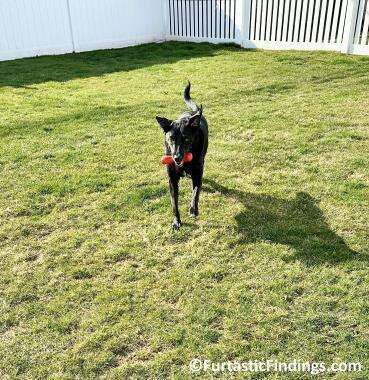
Do you live in a home without a fenced in yard? Do you like to go camping or RVing and want to give your dog some freedom while still keeping them safe? An aerial dog run can help you do just that.
This post will look at what aerial dog runs are, how they work, how they are set up, the benefits to using one, some safety precautions if you use an aerial dog run, keeping them maintained, and some examples of aerial dog runs available.
Table of Contents:
Related: How To Choose The Best Material For Your Dog Run
What Is An Aerial Dog Run?
An aerial dog run provides an effective solution for giving your dog freedom to move while keeping them safe. It is a system that allows your dog to roam within a designated area without being tethered to a single spot.
An aerial dog run usually consists of a cable suspended above the ground, with a leash attached to a pulley that moves along the cable.
This setup gives your dog the ability to walk, run, and play while staying confined to a safe area.
Where Can An Aerial Dog Run Be Set Up?
Aerial dog runs come in either permanent or portable options. A permanent run can be set up in your backyard. Portable options are great to use for:
- Picnics.
- Camping.
- RVing.
- Parks.
- Homes of family/friends.
What Are The Key Components To An Aerial Dog Run?
To understand aerial dog runs, you need to know about cabling systems, harness and attachments, and support structures. Each part plays a role in ensuring the safety and effectiveness of the run.
Cabling Systems
Cabling systems are the backbone of an aerial dog run. They typically use strong, weather-resistant ropes or cables. Materials like kernmantle construction rope and steel cables are common due to their durability and strength.
These cables need to be stretchable and reflective to ensure visibility at any time of day.
Proper tensioning is also important. The cable should be taut enough to prevent sagging yet flexible enough to absorb sudden pulls.
Harness And Attachments
The harness and attachments are important for your dog’s comfort and safety.
A well-fitting harness should distribute pressure evenly across your dog’s chest to avoid strain.
Adjustable settings are useful for accommodating different dog sizes.
Common fasteners include carabiners and quick-release clips. These should be easy to attach and detach, yet secure enough to prevent accidental release.
Support Structures
Support structures hold the cabling and harness in place. They can be trees, poles, or specially designed anchor points. These structures must be stable and capable of supporting the tension in the cables.
Permanent setups might involve securely bolted posts, while portable systems may utilize packable tripods.
Placement is key. Supports should be positioned to maximize your dog’s roaming area and minimize obstacles.
By focusing on these key components, you ensure a durable, safe, and effective aerial dog run for your pup.
How Do I Install An Aerial Dog Run?
Installing an aerial dog run requires a careful choice of location and components.
Regular inspections and maintenance will ensure that your dog remains safe and enjoys the freedom to roam.
Installation Guidelines
First, select a suitable spot in your yard. Ensure there are two stable points to secure the line, like trees or concrete posts.
Avoid selecting points that might have weak structures.
Measure the distance between the two points to determine the length of the line that you need. Follow the manufacturer’s guidelines to determine the right size cable.
Gather all necessary tools and materials, such as the aerial cable, connectors, and pulley system.
Attach the line securely to the anchors, ensuring it’s taut but not overly tight.
Test the line with moderate weight to ensure it can support your dog’s activity.
What Are The Benefits To Using An Aerial Dog Run?
Aerial dog runs offer various benefits such as increased exercise opportunities for dogs and efficient use of space in your yard. It’s important to consider factors like safety and proper installation to maximize these advantages.
Enhanced Mobility For Dogs
An aerial dog run allows your pup to move freely within a designated area. This setup mimics a zipline, enabling your dog to run back and forth with ease. Using an aerial dog run can help your dog get much-needed exercise and outdoor time.
Unlike traditional tie-outs, the aerial run reduces tangling and gives your dog a larger area to explore safely.
It allows your dog to enjoy the outdoors without the constant risk of escaping or getting into restricted areas, like gardens, pools, or out into traffic, and is beneficial for situations where a traditional fenced-in yard isn’t feasible.
This system provides both safety and the freedom to move about, which is important for your dog’s health and wellbeing.
Space-Saving Design
One great feature of an aerial dog run is space efficiency. You don’t need a large yard to give your pup room to play.
The setup only requires two fixed points, such as trees or posts, to run the cable.
This is especially useful in small backyards where space is limited.
What Are Some Considerations When Using An Aerial Dog Run?
When setting up an aerial dog run, it’s important to focus on safety.
Ensure that the cable is strong and securely anchored. The material should withstand your dog’s weight and movement.
Regularly check the equipment for wear and tear.
Additionally, the leash attached to the main cable should be of appropriate length to avoid restricting movement but long enough to prevent entanglement with nearby objects.
Make sure your dog is able to use the run without getting wrapped around the anchor points.
The area you set up the dog run should be in a spot that is free of anything that could cause potential harm, like sharp objects.
It should also offer a place of shade for them to relax and drink water when they need to.
You should also use a harness when attaching your dog to an aerial dog run. This helps take the strain off of your dog’s neck and helps to evenly distribute weight across their chest when they are running and playing.
It is also advisable not to use a retractable dog leash with an aerial dog run. It is best to use a leash with a bungee end to prevent a sudden stop and pull on your dog when they reach the end of the line on the run.
Lastly, you should always supervise your pup when they are out on their aerial dog run to ensure they stay safe while playing.
What Should I Look For When Getting An Aerial Dog Run For My Pup?
There are several things you may want to consider if you will be getting an aerial dog run for your pup.
Size
After you decide where you want to put the run, you will need to measure the space so you can determine what size cable you will need to purchase.
Aerial dog runs come in a variety of sizes up to 200 feet in length.
Material
Look for a cable that is durable and able to withstand your dog and their rambunctiousness.
Examples include kernmantle rope, vinyl coated cable, and plastic coated cable.
Temporary vs. Permanent
You will need to decide if you would like a permanent or temporary dog run.
Temporary aerial dog runs are easy to set up and take down and are suitable if you need to take the run on the go with you to various locations.
Permanent runs are made to be set up once.
Anchors
The anchors used to secure your dog run are important to consider. Do you have trees that you can attach it to? Will you need to install poles into the ground? Are you able to cement them in for greater stability?
Weather Resistant
Aerial dog runs should be weather and rust resistant.
Anti-Shock
Your run should have some kind of shock absorption to protect your pup when they run.
Some aerial dog runs have a slow down at the end to prevent your dog from experiencing a short and forceful stop at the end of the line.
Look for bungee attachments which could also help your pup avoid a sudden and forceful yank at the end of the cable line.
Maintenance Of Your Aerial Dog Run
Regularly check the anchoring points and the line for any signs of wear or damage.
Loose connections or frayed cables can pose a serious risk.
Examine the clips and pulleys to ensure they move smoothly and have not become stuck or rusted.
Inspect the area around the run for any hazards like sharp objects or toxic plants.
Make sure the ground below the run remains soft and free from large rocks or other obstructions that could harm your dog if they trip or fall.
Routine Maintenance
To keep the run in good condition, clean the line and components periodically. This prevents dirt and grime build-up, which can lead to wear.
Lubricate moving parts, like the pulleys, to ensure they continue to work smoothly.
Re-tighten any loose components and replace worn-out parts.
Regular maintenance will extend the life of the aerial dog run and maintain a safe environment for your pup.
Remember to adjust the height of the line if necessary, ensuring it remains at a safe level for your dog to use comfortably.
Proper supervision, especially during the initial use, can help you monitor any potential issues and make necessary adjustments.
Top Aerial Dog Runs
Here are some examples of aerial dog runs available. Product information is according to the manufacturer.
Rover Roamer Sky Track Systems
- Available in permanent or portable systems.
- Comes in various sizes up to 200 feet in length.
- All kits are custom built.
- Tracks are suitable for all weather conditions.
- Both systems include a neck safe bungee segment.
- Portable:
- Quick set up and take down.
- Rope has stretch and flexibility.
- Contrasting colors and reflective materials for increased visibility.
- Kermantle rope.
- Permanent:
- Made for permanent installations.
- Little maintenance needed once set up.
- Multiple anchor point hardware allows for set up without having to drill holes into trees.
- Vinyl coated cable.
- Customizable for up to 3 dogs.
Tumbo Trolley Dog Extreme Aerial Dog Tie Out
- Available in different sizes up to 200 feet long.
- Easy set up and take down.
- Anti- shock for slow down at end of run.
- Plastic coated cable.
- Coiled lead line for less tangles.
- Rust resistant.
- Weather resistant.
- Bungee lead line.
- Travel option up to 75 feet in length.
Boss Pet Prestige Skyline Dog Trolley
- Up to 100 feet in length.
- Vinyl coated cable.
- Designed for all weather conditions.
EveryYay Stretch Your Legs Canine Zipline
- Multiple sizes up to 100 feet in length.
- Made of vinyl coated steel.
- Weather resistant hardware.
Four Paws Heavy Duty Overhead Trolley Exerciser
- Various sizes up to 100 feet in length.
- Includes a 10 foot lead line.
- Rust resistant.
- Vinyl coated cable.
- Shock absorbent spring to reduce tension.
- Tangle free cord.
It is not always possible to have your dog in a fenced yard. An aerial dog run allows your dog the freedom to roam without the restrictions of a tie out. It enables your dog to get some exercise and explore a bit of your yard without getting into traffic or hazardous areas.
Be sure to provide a shaded area for your dog and plenty of water. Always supervise them when using the run.
Please check out our other posts on Health, Indoor, Outdoor, and Travel accessories for your dog, as well as Reviews of various products and travel destinations.