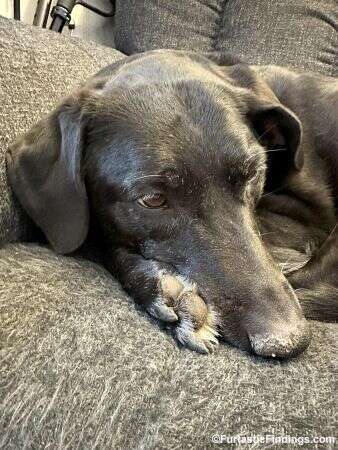
Does your dog have rough, crusty patches on their nose or paw pads? Our dog has a dry patch on her nose. We didn’t think anything of it at first, but it had progressively gotten worse over time. We pointed it out to our veterinarian, but they said not to worry about it. It doesn’t seem to bother our pup either. If your dog also has a dry nose or even dry paw pads, this could be a sign of hyperkeratosis, a skin condition that affects many dogs.
This post will look at hyperkeratosis, symptoms of the condition, the types your dog can get, what causes it, how it is diagnosed, and treatment options available.
Table of Contents:
Related: Dog Moisturizer For Dry Skin: Solutions For Itchy Pups, Dog Skin Cancer: Signs, Prevention, And Treatment Options, Dog Eczema: Effective Treatments For Your Pup’s Skin Health, Skin And Coat Supplements For Dogs, Hypoallergenic Dog Shampoo For Itchy Skin
Disclaimer: This post is meant to be informative and should not be taken as medical advice. Talk to your veterinarian regarding any health concerns you may have for your dog.
What Is Hyperkeratosis?
Hyperkeratosis is a skin condition that affects dogs. It causes thick, rough patches on their paws and nose, which can be uncomfortable for some dogs.
Hyperkeratosis happens when a dog’s body makes too much keratin. Keratin is a protein that helps form skin, hair, and nails. In dogs with this condition, extra keratin builds up on the skin surface.
What Are Symptoms Of Hyperkeratosis In Dogs?
If your dog has hyperkeratosis, you might notice:
- Crusty, hard skin on your dog’s paw pads.
- Thick, dry patches on their nose.
- Cracking or splitting of the affected areas.
- Discomfort when walking or touching their nose.
- Hairlike growths on the paw pads.
These signs often appear gradually. Your dog may not show pain at first, but the condition can worsen over time, leading to cracks that can cause bleeding. This may lead to infection if not treated properly.
What Are The Types Of Hyperkeratosis?
There are two main types of hyperkeratosis in dogs:
Nasal Hyperkeratosis:
- Affects the nose.
- Makes the nose dry and crusty.
- Can lead to nose bleeding if severe.
Paw Pad Hyperkeratosis:
- Affects the paw pads.
- Causes hard, rough growths on pads.
- May make walking painful for your dog.
What Causes Hyperkeratosis In Dogs?
Hyperkeratosis in dogs can stem from genetic factors or be triggered by environmental conditions.
Genetic Predisposition
Some dogs are born with a higher chance of developing hyperkeratosis. Certain breeds like Labrador Retrievers, Irish Terriers, Dogue de Bordeaux, and brachycephalic breeds such as French Bulldogs and Pugs are more likely to have this condition.
The genes that control keratin production can be faulty in these dogs. This leads to an overgrowth of keratin on their paws or nose.
If your dog’s parents had hyperkeratosis, your pup might get it too. Regular check-ups with your vet can catch early signs in at-risk breeds.
Environmental Triggers
Your dog’s surroundings can also cause hyperkeratosis. Dry climates or heated indoor spaces can dry out your pup’s skin, leading to keratin buildup.
Rough surfaces like concrete can irritate your dog’s paw pads. This irritation may trigger excess keratin growth as a protective response.
Parasites or skin infections can also set off hyperkeratosis. Keep your dog clean and check for any signs of pests or skin problems.
Trauma to the paws or nose might cause localized hyperkeratosis. Be careful when walking your dog on hot pavement or sharp surfaces.
How Is Hyperkeratosis In Dogs Diagnosed?
Veterinarians use specific procedures to identify the condition so they can develop an effective treatment plan.
Your vet will start with a physical exam of your dog’s paws and nose. They’ll look for thickened, dry skin or crusty growths. Your veterinarian may take skin scrapings or biopsies to check for infections or other issues.
Blood tests can help rule out underlying health problems, such as autoimmune or hormonal issues. In some cases, your veterinarian might recommend allergy testing to identify potential triggers.
X-rays or other imaging may be needed if your vet suspects bone or joint issues are contributing to the problem.
What Treatment Options Are Available If My Dog Has Hyperkeratosis?
Treatment for hyperkeratosis often involves a mix of approaches. Your veterinarian may prescribe:
- Topical treatments like ointments or creams to soften the skin.
- Oral medications to address underlying causes.
- Antibiotics if there’s an infection.
- Special shampoos or soaks for affected areas.
In severe cases, your veterinarian might trim away excess keratin growth. This procedure is usually done under sedation to keep your dog comfortable.
Home Care Strategies
You can help manage your dog’s hyperkeratosis at home:
- Apply vet-approved moisturizers to affected areas daily.
- Trim your dog’s nails regularly to reduce pressure on paw pads.
- Use protective boots when walking on rough surfaces.
- Keep your dog’s paws clean and dry.
Avoid letting your dog lick or chew affected areas. You might need to use an Elizabethan collar temporarily, if your dog licks these areas excessively.
Monitor your dog’s condition closely. If you notice any changes or worsening symptoms, contact your veterinarian right away.
Prevention And Management
While hyperkeratosis cannot be prevented, as it is usually a genetic condition, you can take steps to manage hyperkeratosis in your dog. Focus on diet, nutrition, and regular skin care to keep your pup comfortable and healthy.
Diet And Nutrition
A balanced diet helps maintain your dog’s skin health. Feed your dog high-quality food rich in omega-3 fatty acids. These nutrients support skin elasticity and moisture.
Add fish oil supplements to your dog’s meals. This can boost skin health from the inside out. Make sure your dog drinks plenty of water to stay hydrated.
Some dogs benefit from vitamins E and A.
Talk to your veterinarian before adding any new supplements to your dog’s diet.
Regular Paw And Skin Care
Check your dog’s paws and nose often. Look for signs of dry, thick skin.
Use dog-safe moisturizers on affected areas. Apply them daily to keep the skin soft. Paw balms can protect your dog’s feet during walks.
Avoid letting your dog walk on hot surfaces. This can worsen paw hyperkeratosis. In winter, use booties to protect paws from salt and ice.
Give your dog regular baths with gentle, moisturizing shampoos. Pat dry and apply lotion after each bath.
Hyperkeratosis is caused by a build up of keratin, leading to rough, dry noses and paw pads. For some dogs, it may not bother them at all. Others may end up with bleeding paws or noses that can become painful and even cause them to be susceptible to infection. If you notice any changes to your dog’s nose or paw pads, see your veterinarian.
For more information on hyperkeratosis in dogs, please see PetMD and Kingsdale Animal Hospital.
Please check out our other posts on Health, Indoor, Outdoor, and Travel accessories for your dog, as well as Reviews of various products and travel destinations.