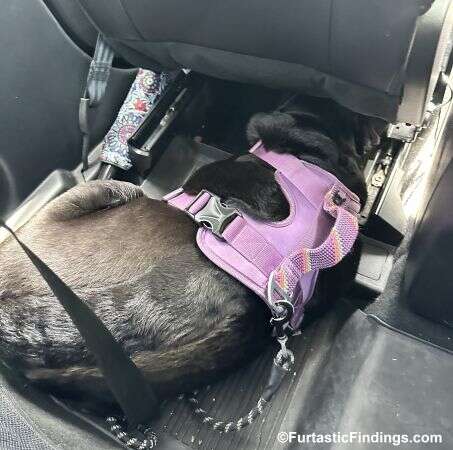
When we first got our dog, she would vomit every time we went for a ride somewhere. Luckily, those days are behind us, but she will curl up in a ball under the front seat to help combat her motion sickness. Motion sickness in dogs is a common problem that can make car rides stressful for both you and your pup, but it doesn’t have to.
This post will look at motion sickness in dogs, what causes it, symptoms of motion sickness, and treatment options available.
Table of Contents:
Related: Best Dog Car Harness For Your Pup, Best Dog Crates For Car Travel
Disclaimer: This post is meant to be informative and should not be taken as medical advice. Talk to your veterinarian regarding any health concerns you may have for your dog.
What Is Motion Sickness In Dogs?
Motion sickness is a common issue in dogs, especially puppies, affecting between 20-50% of pups. The condition happens when your dog’s sense of balance is disrupted during travel, causing nausea and discomfort.
What Causes Motion Sickness In Dogs?
Motion sickness in dogs primarily stems from balance and equilibrium issues. Your dog’s inner ear structures, which help maintain balance, can send conflicting signals to the brain during motion. This mismatch between what your dog sees and what their body feels creates discomfort.
In puppies, the vestibular system (balance organs) isn’t fully developed, making them more susceptible. This explains why younger dogs experience motion sickness more frequently than adults, similar to how children are more prone to carsickness than grown-ups.
Anxiety can worsen motion sickness. If your dog associates car rides with negative experiences like vet visits, their stress can trigger or intensify nausea symptoms.
Previous bad experiences in vehicles may also condition your dog to feel sick during travel, creating a cycle of anxiety and physical symptoms.
Symptoms To Help Identify Motion Sickness
The signs of motion sickness in dogs are fairly recognizable if you know what to look for:
Physical symptoms:
- Excessive drooling (hypersalivation).
- Frequent yawning or panting.
- Vomiting or retching.
- Swallowing repeatedly.
Behavioral indicators:
- Restlessness or inability to settle.
- Whining or crying.
- Licking lips excessively.
- Trembling or shaking.
Some dogs may freeze or become unusually still during travel. Others might pace anxiously if space allows. Your dog may also show reluctance to enter vehicles if they’ve experienced motion sickness before.
Early recognition of these symptoms allows you to address the problem before it develops into a travel phobia.
How Dogs Process Motion Differently
Dogs process motion differently than humans due to their sensory makeup. Their heightened sense of smell makes them more sensitive to vehicle odors, which can compound nausea feelings.
A dog’s visual system processes movement differently. While humans focus primarily on what’s ahead, dogs pick up peripheral motion more acutely, potentially causing more sensory confusion during travel.
Dogs live more in the present moment and can’t understand the concept of “temporary discomfort for future benefit.” This means they can’t rationalize travel sickness like humans might.
The canine vestibular system, while similar to humans, has different sensitivities. Quick acceleration, stopping, and turning can trigger more intense reactions in dogs than in people.
Are Certain Dog Breeds More Prone To Motion Sickness?
While any dog can experience motion sickness, certain factors may make some breeds more susceptible:
Breeds with shorter snouts (brachycephalic breeds) like Bulldogs, Pugs, and Boston Terriers often have more difficulty with motion sickness due to their respiratory anatomy.
Breeds prone to anxiety, such as Border Collies, Toy Poodles, and Bichon Frises, may experience stress-induced motion sickness more frequently.
Age is generally a more significant factor than breed. Puppies of all breeds are more likely to experience motion sickness than adult dogs.
Physical build can play a role too. Smaller dogs sitting lower in the vehicle may have more limited views, potentially increasing disorientation during travel.
Genetic predispositions within family lines can also influence susceptibility, though this varies case by case rather than by specific breed standards.
Prevention And Management Strategies
Helping your dog overcome motion sickness requires a multi-faceted approach. You can use several effective methods to prevent and manage this condition, from training techniques to medications and comfort measures.
Behavioral Training Techniques
Start by creating positive associations with car travel. Take your dog to the car without driving anywhere, offering treats and praise to build confidence. Gradually increase exposure by sitting in the parked car with the engine running for 5-10 minutes daily.
Once comfortable, try short drives of just a few minutes, gradually extending the duration. Always drive to pleasant destinations occasionally, not just the vet.
Position your dog properly for travel. Face them forward in the car, either in a secured crate or with a special dog seatbelt. The middle back seat often provides the smoothest ride with less motion.
Limit food intake before travel – try feeding your dog about 3-4 hours before departure to reduce nausea risk.
Medications And Their Effects
Several medications can help manage motion sickness in dogs when behavioral techniques aren’t enough. These can include:
- Cerenia (maropitant) – specifically designed for dog motion sickness, lasting 24 hours.
- Antihistamines like Dramamine or Benadryl – may cause drowsiness but can reduce nausea.
- Anti-anxiety medications – help if anxiety contributes to motion sickness.
Always talk to your veterinarian before giving any medication. They can recommend the proper dosage based on your dog’s weight, age, and health status.
Start with the lowest effective dose to minimize side effects like excessive drowsiness or dry mouth. Administer medication 30-60 minutes before travel for maximum effectiveness.
Natural Remedies And Comfort Measures
Lower car windows a few inches to equalize air pressure and provide fresh air. This simple step often reduces nausea significantly.
Ginger has natural anti-nausea properties. Try giving small amounts of ginger snaps or ginger supplements (with vet approval) before travel.
Calming pheromone products can reduce anxiety. Spray in the car or use a collar version for longer-lasting effects.
Limit visual stimulation by using window shields or placing the crate where your dog can’t see the moving landscape. Some dogs do better when they can see out the front window rather than the sides.
Keep the car cool and well-ventilated. Heat can worsen nausea symptoms in dogs just as it does in humans.
Bringing a favorite toy on car rides can also help to decrease their anxiety.
When To Talk To Your Veterinarian
While some cases of motion sickness in dogs can be managed at home, certain situations require professional medical attention. Knowing when to seek veterinary help ensures your dog receives proper care.
Identifying Serious Cases
Motion sickness that persists despite home remedies needs veterinary attention. Contact your vet if your dog shows severe symptoms like excessive vomiting, continued distress after travel, or signs of dehydration.
If your dog’s symptoms worsen over time or include unusual behaviors like aggression during travel, it’s time for a professional evaluation. Some dogs develop intense fear or anxiety related to travel that requires medical intervention.
Dogs that refuse to eat or drink after experiencing motion sickness should see a vet within 24 hours. This is especially important for puppies, senior dogs, or those with existing health conditions.
Diagnostic Procedures
When you visit the vet for motion sickness concerns, expect a thorough physical examination. Your vet will check your dog’s ears for infections or balance issues that might contribute to travel sickness.
Be prepared to provide a detailed history of:
- When symptoms occur.
- How long they last.
- What makes them better or worse.
- Any treatments you’ve tried.
Your veterinarian might recommend blood tests to rule out underlying health problems that could worsen motion sickness. In some cases, they may suggest examining your dog’s inner ear function.
For severe cases, vets might conduct additional tests to ensure the symptoms aren’t related to more serious conditions like vestibular disease or neurological issues.
Thankfully, our dog’s motion sickness has gotten better over time, although she still does not like being in the car. Motion sickness in dogs can be managed with both natural remedies and/or medication prescribed by your veterinarian. Talk to your veterinarian if you are concerned about your dog’s motion sickness so they can provide your pup with the proper treatment.
For more information on motion sickness in dogs, please see: VCA Animal Hospitals, American Kennel Club and PetMD.
Please check out our other posts on Health, Indoor, Outdoor, and Travel accessories for your dog, as well as Reviews of various products and travel destinations.