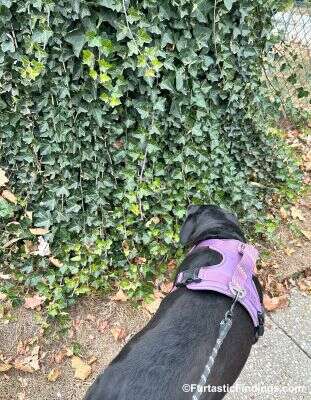
Many pet parents enjoy having plants in their homes and gardens or they may encounter them on walks with their pups. But some common plants can be harmful to pets. Ivy is one type of plant that raises concerns for pet parents.
When we take our dog for walks, we often come across ivy and other plants that always seem to be a magnet for our dog to investigate and we wonder how safe it is for her to do so. Maybe you do too when you take your dog for a walk.
This post will look at ivy plants, what toxins they may contain, symptoms of ivy poisoning, what to do if your dog ingests ivy, and if there are any safe ivy plants for your dog to be around.
Table of Contents:
| What Are The Risks Of Ivy For Dogs? |
| What Are Symptoms Of Ivy Poisoning In Dogs? |
| What Ivy Is Safe For Dogs To Be Around? |
| What Do I Do If My Dog Ate Ivy? |
| Preventing Ivy Exposure |
Related: Best Dog Safe Houseplants To Liven Up Your Home, Dog Safe Weed Killer: Protecting Your Dog With Pet Friendly Solutions
What Are The Risks Of Ivy For Dogs?
Ivy plants can be harmful to dogs if eaten. The leaves and berries contain toxic compounds that may cause health issues.
Ivy plants have chemicals called saponins and polyacetylene compounds. These are toxic to dogs. The leaves, stems, and berries all contain these substances. Even small amounts can make your dog sick.
Eating ivy can irritate your dog’s mouth, throat, and stomach. The toxins may also affect the nervous system. Some types of ivy are more dangerous than others. English ivy is one of the most toxic varieties for dogs.
It’s best to keep all ivy plants out of your dog’s reach. This includes both indoor and outdoor plants. If you have ivy in your yard, consider removing it or fencing it off.
What Are Symptoms Of Ivy Poisoning In Dogs?
Look for these signs if you think your dog ate ivy:
- Vomiting.
- Diarrhea.
- Drooling.
- Loss of appetite.
- Weakness.
- Shaking.
- Trouble walking.
Some dogs may also have:
- Skin rashes.
- Breathing issues.
- Fever.
- Fast heart rate.
If you see any of these symptoms, call your veterinarian right away. Quick treatment is important. Your veterinarian may need to give your dog fluids or medicine. In severe cases, they might need to stay at the animal hospital.
Keep an eye on your dog when outside. Don’t let them chew on plants. If you’re not sure what a plant is, it’s safer to keep your dog away from it.
What Ivy Is Safe For Dogs To Be Around?
No types of true ivy plants are completely safe for dogs. All varieties contain toxic compounds that can harm your pup if ingested.
Some less toxic options that resemble ivy include:
- Swedish Ivy.
- Grape Ivy.
While these plants are less dangerous, they can still cause mild stomach upset if eaten. It’s best to keep your dog away from any ivy-like plants to be safe.
Always supervise your dog outdoors and teach the “leave it” command. This helps prevent them from nibbling on plants.
What Do I Do If My Dog Ate Ivy?
Call your veterinarian right away if you know your dog ate ivy. Even if they seem fine, it’s best to get expert advice. Your veterinarian may tell you to bring your dog in or to watch them at home.
Take your dog to the vet if you see any of these symptoms:
- Vomiting or diarrhea.
- Drooling more than normal.
- Trouble breathing.
- Shaking or tremors.
- Weakness or stumbling.
Don’t wait to get help if your dog shows these signs. Quick treatment can prevent worse problems. Bring a sample of the ivy plant with you if you can. This will help your veterinarian know exactly what your dog ate.
You can also consult with a pet poison control hotline if you have questions, such as petpoisonhelpline.com.
Preventing Ivy Exposure
Keeping dogs safe from ivy requires proactive steps. You can protect your pup through smart gardening choices and training techniques.
Safe Gardening Practices
Remove ivy from your yard if possible. Replace it with dog-friendly plants. If you must keep ivy, create barriers to block access. Use fencing or rocks to separate ivy areas from dog spaces.
Trim ivy regularly to prevent overgrowth. Clean up clippings right away. Wear gloves when handling ivy to avoid spreading oils.
Consider raised garden beds for other plants. This separates vegetation from dog areas. Use mulch or gravel in dog zones instead of ivy ground cover.
Keep compost bins closed. Don’t add ivy trimmings to open compost piles.
Training Dogs To Avoid Toxic Plants
Teach the “leave it” command. Use it for ivy and other unsafe plants. Practice in controlled settings before real-world use.
Reward your dog for ignoring ivy on walks. Bring treats to reinforce good behavior.
Use bitter sprays on yard ivy as a deterrent.
Supervise outdoor time in ivy-prone areas. Redirect your dog if they show interest in the plant.
Create safe exploration zones in your yard. Fill them with dog-friendly toys and scents. This gives your pup fun alternatives to ivy.
Ivy can be toxic to dogs if ingested or touched, depending on the species. Teaching our dogs to stay away from such plants on walks and avoiding having them in our yards can help keep our pups safe.
For more information on ivy plant toxicity, please see Weddington Animal Hospital and ASPCA.
Please check out our other posts on Health, Indoor, Outdoor, and Travel accessories for your dog, as well as Reviews of various products and travel destinations.