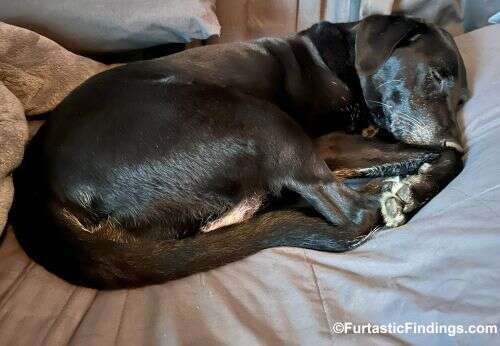
Have you ever noticed your dog twitching or moving while they sleep? Our dog will not only twitch when sleeping, but she will let out little sounds as well. This common behavior can be both cute and concerning for pet parents. You might even wonder if your pup is having a bad dream or experiencing a health issue.
This post will look at why your dog may twitch when sleeping, the science behind why this occurs, how to differentiate between twitching and seizures, and when this behavior should be concerning.
Table of Contents:
| Understanding Dog Sleep Patterns |
| The Science Behind Sleep Twitching |
| Differentiating Twitches From Seizures |
| When To Consult Your Veterinarian |
Related: Calming Beds For Dogs: Helping Improve Your Pup’s Sleep, Why Square Dog Beds Are A Game-Changer For Your Pup’s Sleep
Disclaimer: This post is meant to be informative and should not be taken as medical advice. Talk to your veterinarian regarding any health concerns you may have for your dog.
Understanding Dog Sleep Patterns
Dogs have unique sleep patterns that can affect their twitching behavior. Learning about dog sleep cycles and what influences them can help you better understand your dog’s nighttime movements.
The Sleep Cycle Of Dogs
Dogs cycle through different sleep stages, just like humans. They have periods of light sleep, deep sleep, and REM sleep. During REM sleep, dogs’ brains are very active.
In REM sleep, you might notice your dog’s eyes moving behind closed lids. This stage is when most twitching happens. Dogs typically enter REM sleep about 20 minutes after falling asleep.
Dogs spend about 10% of their sleep time in REM, compared to humans who spend about 25%. This means they have shorter, more frequent cycles of REM sleep throughout the night.
Factors Influencing Sleep Twitches
Several things can affect how much your dog twitches during sleep. Age plays a role – puppies and older dogs often twitch more than adult dogs. The size of your dog matters too. Smaller breeds tend to twitch more than larger ones.
Your dog’s daily activities can impact sleep twitches. Dogs who are very active during the day might twitch more at night. Stress or anxiety can also increase twitching.
Diet and health issues can play a part. Some medications may cause more twitching. If you notice sudden changes in your dog’s sleep behavior, it’s best to check with your veterinarian.
The Science Behind Sleep Twitching
Sleep twitching in dogs involves complex brain processes and muscle activity. It’s linked to different sleep stages and neurological functions.
REM Sleep And Muscle Atonia
During REM sleep, your dog’s brain is very active. This stage is when most dreams occur. The body enters a state called muscle atonia. This means most muscles are temporarily paralyzed.
Muscle atonia stops your dog from acting out dreams. But small twitches can still happen. These may be from brain signals leaking through to the muscles. You might see your dog’s paws or tail move slightly.
REM sleep starts about 20 minutes into your dog’s sleep cycle. It can last for 2-3 minutes at a time. Puppies spend more time in REM sleep than adult dogs.
Neurological Explanations For Twitches
Sleep twitches involve the central nervous system. They’re called myoclonic jerks. These are sudden, involuntary muscle contractions.
Your dog’s brain sends signals to muscles during sleep. Sometimes these signals cause small movements. This is normal and harmless.
Twitches may also help your dog’s developing nervous system. In puppies, they could strengthen neural connections. This might improve motor skills and coordination.
Some twitches might be linked to your dog processing information from the day. It could be part of how their brain sorts and stores memories during sleep.
Differentiating Twitches From Seizures
Dogs often twitch while sleeping, but sometimes it can be hard to tell if it’s normal or a sign of a problem.
Identifying Normal Sleep Twitches
Normal sleep twitches in dogs are usually small, quick movements. You might see your dog’s paws or legs move slightly. Their ears may flick or their whiskers might wiggle. These twitches typically last just a few seconds.
Your dog’s breathing stays steady during sleep twitches. Their eyes may move under closed lids, showing they’re dreaming. Sleep twitches often happen when your dog is in deep sleep.
If you call your dog’s name softly, they might wake up easily from a normal twitch. Once awake, they’ll act normal and alert.
Recognizing Signs Of Seizures
Seizures look very different from sleep twitches. During a seizure, your dog’s whole body may shake or go stiff. Their legs might paddle or thrash around. Seizures usually last longer than twitches, often for several minutes.
Your dog might lose control of their bladder or bowels during a seizure. They may foam at the mouth or drool more than usual. Their eyes might roll back or look unfocused.
After a seizure, your dog may seem confused or tired. They might have trouble walking or standing up. If you see these signs, call your veterinarian right away. Seizures can be serious and need medical care.
When To Consult Your Veterinarian
Dogs often twitch in their sleep, but sometimes it can be a sign of health issues. It’s important to know when to seek help from your veterinarian.
Monitoring Your Dog’s Sleep Behaviors
Keep an eye on your dog’s sleep patterns. Watch for changes in how often or how much they twitch. Normal twitching is brief and gentle. It usually happens in short bursts.
Take note if the twitching becomes:
- More frequent.
- Longer lasting.
- More intense.
Also watch for other odd behaviors during sleep. These might include:
- Loud vocalizations.
- Disturbed breathing.
- Trouble waking up.
If you spot these signs, it’s time to talk to your vet.
Understanding When Twitching Is A Concern
Some twitching is normal, but too much can be a problem. Call your veterinarian if:
- Twitching lasts more than a few minutes.
- Your dog seems upset or in pain while twitching.
- Twitching happens when awake too.
- There are changes in eating or drinking habits.
These could point to health issues like:
- Seizures.
- Nerve problems.
- Muscle disorders.
Your veterinarian can check for these and other possible causes. They might do tests to find out what’s wrong. Quick action can help solve problems before they get worse.
Don’t try to treat strange twitching on your own. Always ask your veterinarian for help if you’re worried about your dog’s sleep behaviors.
Twitching while sleeping is a normal behavior your dog experiences during REM sleep. If you notice any signs of anything other than normal sleep twitching, see your veterinarian.
For more information on why dogs twitch when sleeping, please see American Kennel Club and PetMD.
Please check out our other posts on Health, Indoor, Outdoor, and Travel accessories for your dog, as well as Reviews of various products and travel destinations.