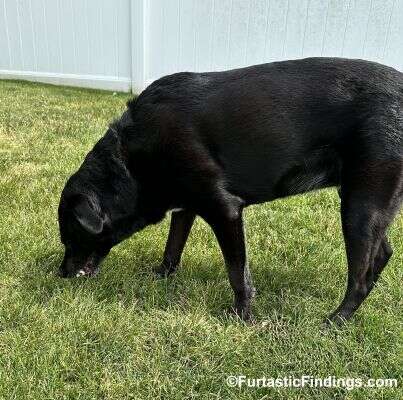
Does your dog like to eat grass? Our dog chews on grass in our yard every so often. We were always told growing up that if dogs eat grass they are trying to settle their stomach. But is this true?
This post will look at this common question: why do dogs eat grass?
Table of Contents:
Disclaimer: This post is meant to be informative and should not be taken as medical advice. Talk to your veterinarian regarding any health concerns you may have for your dog.
Dog Behavior And Diet
No one knows for sure why dogs eat grass. One theory says that dogs eat grass for different reasons linked to their instincts and diet. This behavior stems from their wild ancestors and can relate to their nutritional needs.
Natural Foraging Instincts
Dogs come from wild canines that hunted and scavenged for food. This ancestry shapes their eating habits today. In the wild, dogs would eat entire prey animals, including stomach contents full of plants.
Your pup may eat grass as a holdover from this natural foraging behavior. It’s a way for them to explore their environment and find different food sources.
Dietary Needs And Nutrient Seeking
Another theory says that your dog might eat grass to get more fiber in their diet. Grass provides roughage that can aid digestion. If your dog’s food lacks fiber, they may turn to grass as a supplement.
Dogs may also eat grass to get extra nutrients. Grass contains vitamins and minerals that could be missing from their regular meals. Some experts think dogs can sense what nutrients their bodies need.
If your dog eats grass often, talk to your veterinarian. They can check if your pup’s diet meets all their nutritional needs. A balanced dog food should provide the right mix of nutrients for your pup.
Taste And Texture
Yet another theory states some dogs simply like the taste or texture of grass. They may chew on it out of boredom or curiosity. This behavior is usually harmless unless the grass has pesticides or other chemicals.
Health Implications Of Grass Eating
Dogs eating grass can affect their health in a few ways. It may help with digestion but also pose some risks.
Eating too much grass can upset their stomach. It might cause vomiting or diarrhea in some dogs.
Potential Toxins And Parasites
Grass can carry risks for dogs. Pesticides and herbicides used on lawns are toxic. These chemicals can make your dog sick if eaten.
Parasites like roundworms can live in grass. Dogs may pick these up when eating grass. Regular deworming helps protect against this risk.
Some plants that look like grass are poisonous to dogs. Learn which plants in your yard are safe. Keep your dog away from any that could be harmful.
Always watch what your dog eats outside. If you see signs of illness after grass eating, call your veterinarian right away.
Interpreting Grass Eating Habits
Dogs eating grass can mean different things. Looking at how and when they do it gives clues about what’s going on.
Communication Of Discomfort
Your dog might eat grass to tell you something’s wrong. Watch for these signs:
- Eating grass fast and in large amounts.
- Throwing up after eating grass.
- Licking their lips or swallowing a lot.
- Seeming restless or anxious.
These could mean your dog has an upset stomach or feels sick. If you see this often, talk to your veterinarian. They can check for health issues causing the behavior.
Differentiating Between Normal And Compulsive Behaviors
Normal grass eating is casual and doesn’t happen all the time. Your dog might:
- Nibble on grass during walks.
- Eat small amounts in the yard.
- Stop when you call them.
Compulsive grass eating is different. Signs include:
- Eating grass non-stop.
- Getting upset if stopped.
- Ignoring other fun activities to eat grass.
If you’re worried about how much grass your dog eats, keep a log. Write down when and how much they eat. This info helps your veterinarian figure out if it’s a problem or just normal dog behavior.
So, there is not one specific reason why your dog may be eating grass. It may be a holdover of ancestral behavior, they may be trying to fill a dietary need, they may just like the taste of grass, or they may chew it out of boredom. If any grass chewing behavior worries you, talk to your veterinarian.
For more information about dogs eating grass, please see VCA Animal Hospitals, AKC, and PetMD.
Please check out our other posts on Health, Indoor, Outdoor, and Travel accessories for your dog, as well as Reviews of various products and travel destinations.